Water, Fire & Storm Damage Restoration & Mold Removal Port Charlotte
Property damage can interrupt your home, business, and peace of mind. Explore professional water damage cleanup, flood restoration, fire and smoke recovery, mold remediation, and storm damage solutions for properties throughout Port Charlotte and the surrounding Charlotte County area.
Restoration Reviews & Customer Feedback Near Port Charlotte
Verified customer reviews help Port Charlotte property owners research water, fire, mold, and storm restoration providers. Rating displays are shown only where genuine verified profile data is available.
Property Damage Restoration Services in Port Charlotte
Southwest Florida homes and businesses face unique structural challenges. Between summer tropical systems, high ambient humidity, aging plumbing infrastructures, and sudden appliance line ruptures, property damage demands swift, methodical restoration. Saturated concrete block walls, wet drywall gypsum, and soaked insulation lose structural stability and quickly foster biological growth if drying protocols are delayed.
Successful property recovery in Charlotte County requires more than extraction; it mandates accurate source isolation, psychrometric moisture mapping, sanitary containment, controlled structural drying, and certified antimicrobial treatments. Our restoration framework guides property owners through emergency mitigation toward complete reconstruction.
Water Damage
Emergency water extraction, hidden leak detection, structural cavity drying, and rapid humidity mitigation for burst pipes, slab leaks, and appliance failures.
Explore Water Solutions →Fire & Smoke
Acidic soot removal, smoke odor elimination, structural framing cleaning, kitchen flare-up restoration, and meticulous contents preservation.
Explore Fire Recovery →Mold Remediation
Containment engineering, HEPA negative air scrubbing, microbial remediation, attic moisture correction, and permanent deodorization.
Explore Mold Remediation →Storm & Hurricane
Wind-driven rain extraction, storm surge cleanup, emergency roof tarping, window board-up, and full structural reconstruction.
Explore Storm Services →Restoration Services for Homes & Commercial Properties
Property damage affects residential and commercial buildings differently. Explore restoration services organized around the needs of homeowners, property managers, business owners, and commercial facilities across Port Charlotte and surrounding Southwest Florida communities.
Residential Restoration
Water damage, fire and smoke, mold, storm damage, appliance leaks, plumbing failures, structural drying, and reconstruction for homes throughout Charlotte County.
- • Burst pipe and supply line cleanup
- • Appliance overflow and leak restoration
- • Mold remediation and containment
- • Hurricane and storm damage recovery
- • Structural drying and reconstruction
Commercial Restoration
Commercial fire damage, flooding, mold remediation, structural drying, and reconstruction for apartments, condominiums, hotels, restaurants, offices, and warehouses.
- • Multi-unit and multifamily water damage
- • Condo & HOA restoration coordination
- • Hospitality and restaurant property damage
- • Office, retail, and warehouse cleanup
- • Large-loss and emergency disaster response
What Caused Your Water Damage?
Water damage can begin with a burst pipe, appliance failure, overflowing drain, roof leak, or hidden moisture problem. Select the situation that best matches your property to learn about cleanup and restoration options.
Burst Pipe Water Damage
Supply line ruptures and frozen or corroded pipe failures flooding walls and floors.
AC Condensate Drain Overflow
Clogged condensate lines backing into ceilings, drywall, and interior wall cavities.
Dishwasher Leak Cleanup
Water spreading beneath cabinets, subfloors, and adjacent kitchen materials.
Washing Machine Overflow
Hose bursts and drain overflows flooding laundry rooms and nearby spaces.
Toilet Overflow Cleanup
Contaminated water requiring sanitization, extraction, and drying evaluation.
Shower Pan Leak Damage
Failed waterproofing allowing moisture beneath flooring and into subfloors.
Roof Leak Water Damage
Storm-driven rain entering through compromised roofing and attic spaces.
Hidden Water Damage Behind Walls
Concealed moisture inside wall cavities, beneath flooring, and above ceilings.
Wet Carpet & Padding Removal
Saturated carpet and padding requiring extraction, contamination, and subfloor drying.
Hardwood Floor Water Damage
Cupping, buckling, and warping from moisture absorption in wood flooring.
Kitchen Cabinet Water Damage
Swollen cabinetry, trapped moisture under toe kicks, and subfloor concerns.
Bathroom Water Damage
Plumbing leaks, failed seals, and moisture behind bathroom walls and floors.
Garage Flood Cleanup
Storm flooding, drainage backups, and water intrusion into attached garages.
Attic Water Damage & Moisture
Roof leaks, condensation, and wet insulation affecting attic assemblies.
Water Heater Leak Damage
Tank failures and supply line leaks flooding nearby rooms and flooring.
Complete Water, Fire, Mold & Storm Restoration Services Near Port Charlotte
Property damage in Port Charlotte and the surrounding Charlotte County area rarely fits a single category. Water, fire, mold, storm, biohazard, and reconstruction needs each demand a different assessment, mitigation, drying, cleaning, and restoration approach. The detailed service blocks below explain what each restoration service addresses, the practical benefits, the technical considerations, and the common solutions available to Port Charlotte property owners.
Different damage conditions require different responses, and some situations call for specialized professional help. Use these explanations to understand which restoration service applies to your property and how related services connect.
Water Damage Restoration & Cleanup in Port Charlotte
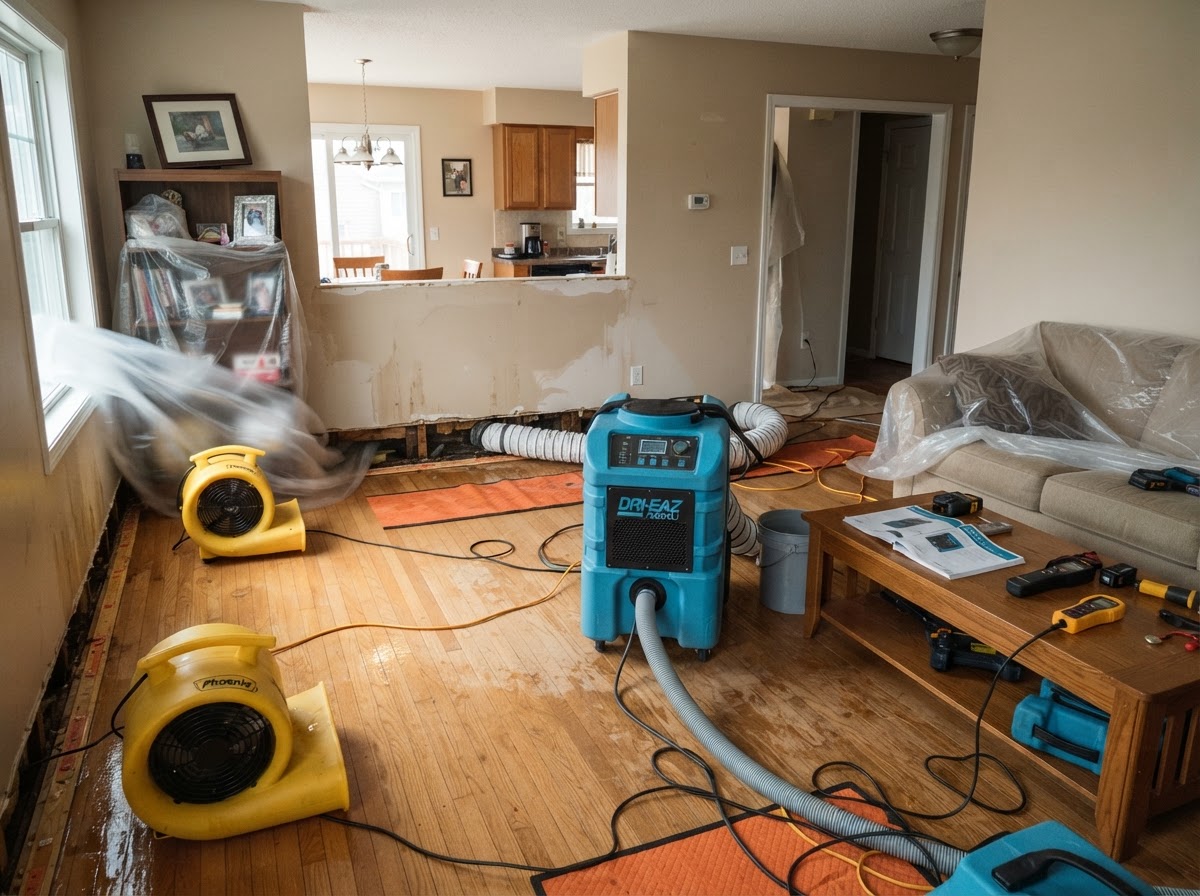
Water damage restoration addresses the full chain of effects left when water enters a building, from the obvious pooled water on the floor to the moisture that wicks quietly up drywall and into wall cavities. For Port Charlotte homes and businesses, the most common triggers are plumbing supply line failures, appliance overflows, roof leaks during summer storms, and air conditioning condensate backing into ceiling assemblies. Each cause leaves a different signature in the building materials and calls for a different assessment.
Proper restoration is more than extraction. Identifying the water source, classifying the contamination level, mapping the moisture that remains hidden behind finishes, and then drying the structure back to an acceptable moisture content are what separate a completed restoration from a surface cleanup. Left unaddressed, saturated drywall, wet insulation, and damp subfloors continue to degrade and create the conditions for mold growth.
A thorough water damage plan connects the initial emergency response to the later material decisions, including which flooring and drywall can be dried and restored and which must be removed and replaced. See related burst pipe water damage.
Benefits for Property Owners
- Identification of both visible and concealed water damage
- Reduced continued material deterioration through appropriate mitigation
- Clearer understanding of affected flooring and wall assemblies
- Organized restoration planning from mitigation to repairs
- Useful damage documentation for restoration records
Service Features & Considerations
- Water source identification and isolation
- Moisture assessment and thermal inspection
- Water contamination classification
- Extraction planning and execution
- Structural drying with monitoring
- Material salvageability evaluation
Popular Service Types & Solutions
- Residential water damage cleanup
- Plumbing leak restoration
- Water-damaged drywall repair
- Flooring water damage restoration
- Commercial water damage restoration
Emergency Water Extraction & Removal Near Port Charlotte
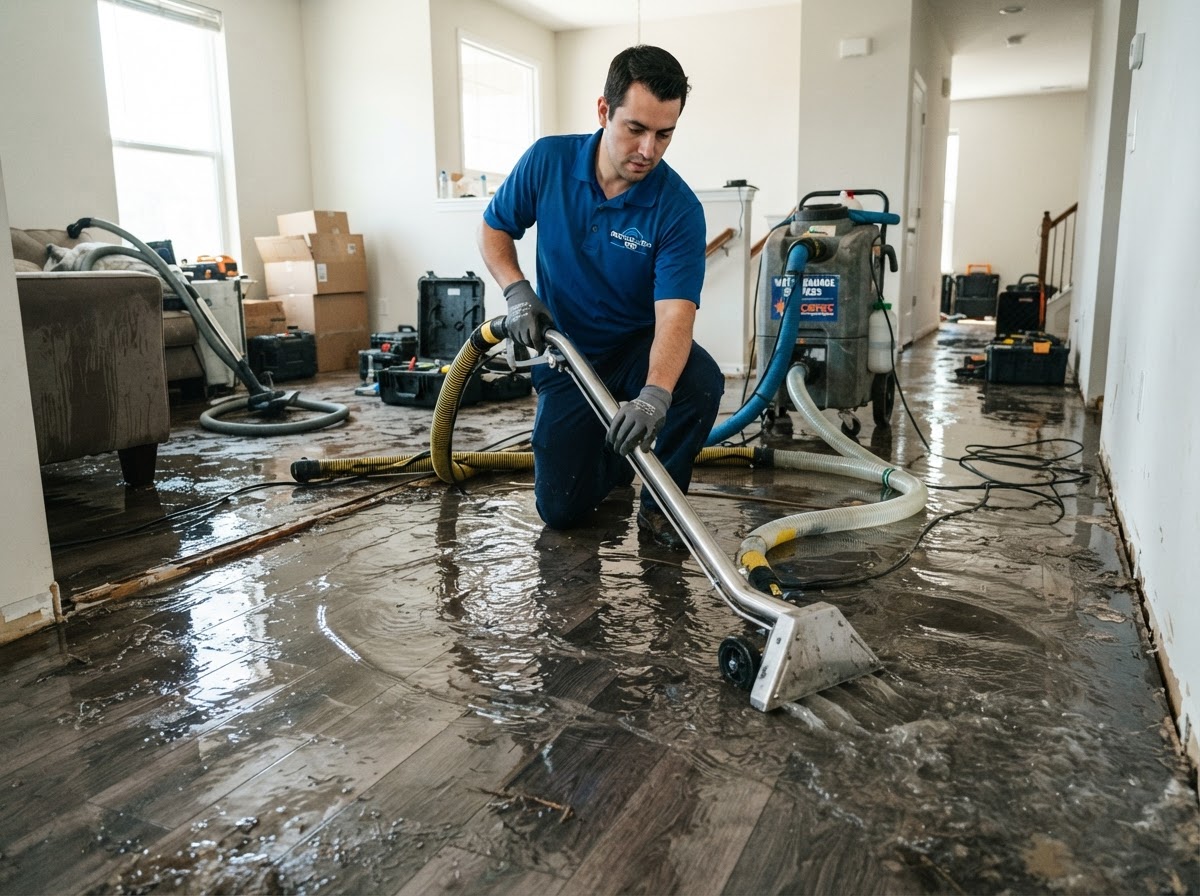
Emergency water extraction is the first physical step when standing water accumulates inside a property, whether from a burst pipe, a failed water heater, an overflowing appliance, or interior flooding after heavy rain. The priority is removing the accessible water quickly so that the slower, more critical work of structural drying can begin.
Extraction is not the same as drying. Even after the visible water is removed, moisture remains trapped in carpet padding, beneath floating flooring, inside wet subfloors, and within saturated drywall. The transition from extraction to structural drying is where most long-term problems are either prevented or created.
Because every flooding event carries a different contamination profile, the extraction approach is selected after evaluating the water source and the materials it has touched.
Benefits for Property Owners
- Removal of accessible standing water
- Better assessment of remaining saturation
- Preparation of the structure for drying
- Reduction of prolonged water exposure
- More organized mitigation planning
Service Features & Considerations
- Source and safety assessment
- Pumping or extraction method selection
- Water contamination evaluation
- Flooring and subfloor inspection
- Moisture mapping
- Drying coordination
Popular Service Types & Solutions
- Standing water extraction
- Burst pipe water removal
- Flooded room extraction
- Wet carpet water removal
- Appliance overflow cleanup
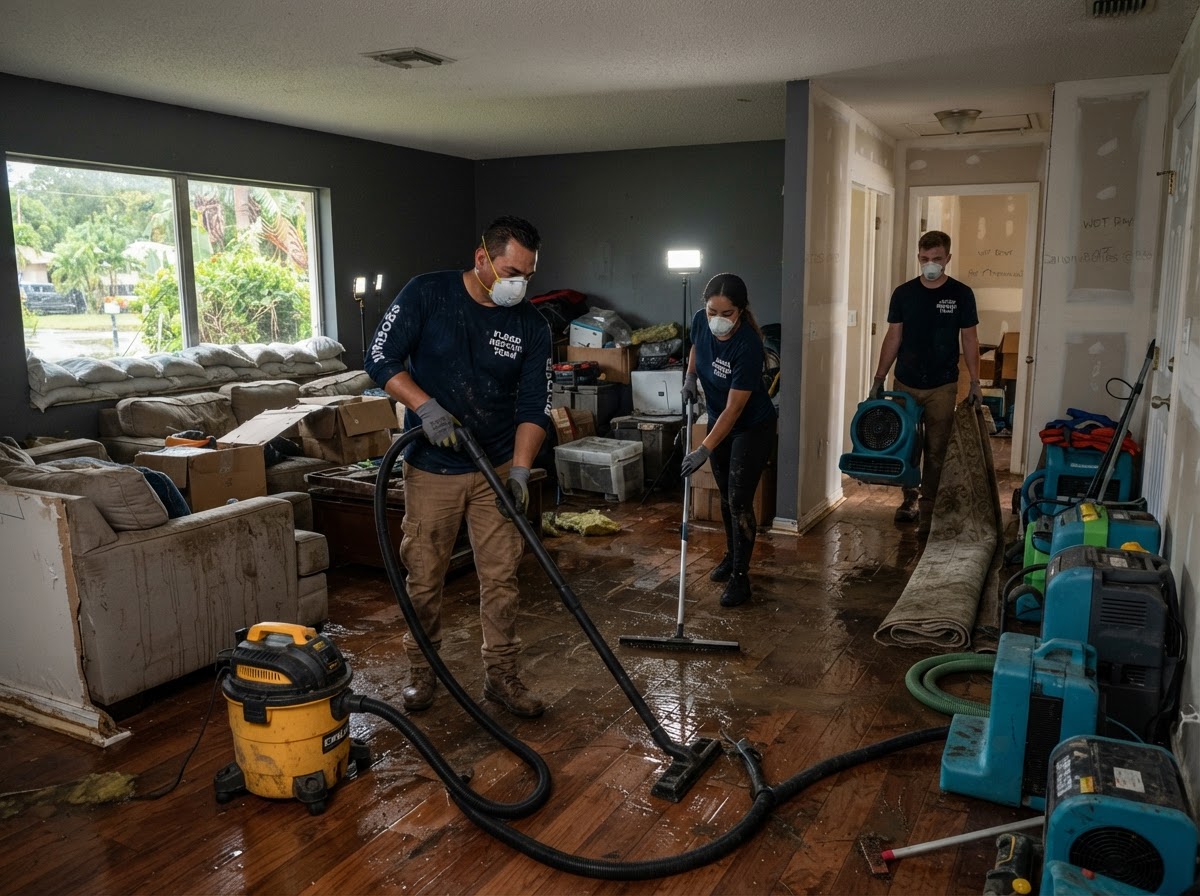
Flood Damage Cleanup & Restoration in Port Charlotte
Flood damage cleanup addresses property affected by stormwater intrusion, heavy rainfall, and floodwater entering a building through doors, openings, or rising exterior water. Unlike a clean plumbing leak, floodwater is treated as potentially contaminated because it has traveled over ground surfaces, across debris, and through unknown materials before reaching the interior.
That distinction drives the entire cleanup. Flood-damaged drywall, saturated insulation, and porous flooring are evaluated for contamination rather than simply dried in place. Sediment and debris are removed, affected materials are assessed for replacement, and the structure is dried with an awareness of what the water carried with it.
Flood restoration connects the immediate contamination-aware cleanup to the longer rebuild, helping property owners understand which materials can be saved and which should be removed for safety. See related saltwater flood damage & corrosion.
Benefits for Property Owners
- Appropriate flood damage assessment
- Identification of contamination concerns
- Evaluation of affected porous materials
- Better planning for cleanup and drying
- Organized documentation and restoration
Service Features & Considerations
- Floodwater classification
- Water extraction
- Debris and sediment evaluation
- Contamination controls
- Structural drying
- Material replacement considerations
Popular Service Types & Solutions
- Residential flood cleanup
- Stormwater damage restoration
- Flooded flooring cleanup
- Flood-damaged drywall assessment
- Post-flood structural drying
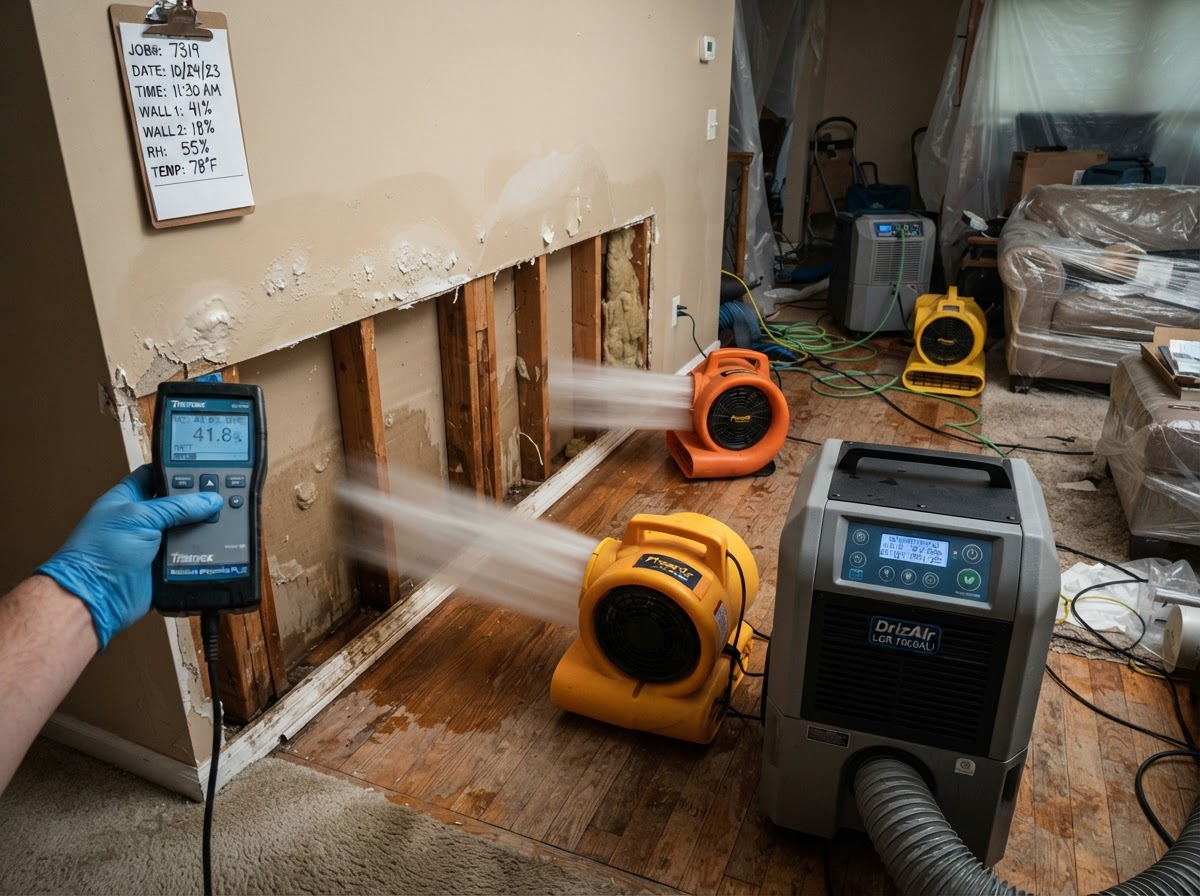
Structural Drying & Dehumidification Near Port Charlotte
Structural drying is the process of pulling trapped moisture out of building materials after water extraction or intrusion. A floor that looks dry at the surface can still hold significant moisture inside drywall, within wall cavities, in damp insulation, across wood framing, and beneath subfloors and concrete assemblies.
Drying combines air movement, dehumidification, and measurement. Air movers drive moisture out of materials and into the air; dehumidifiers pull that moisture back out of the air; and moisture readings track progress so drying ends when the structure, not just the surface, has reached an acceptable condition.
Because different materials release moisture at different rates, drying decisions are material-specific. A concrete block wall, a gypsum drywall assembly, and a wood subfloor each follow a different drying curve. See related concrete block wall drying.
Benefits for Property Owners
- Improved assessment of hidden moisture
- Drying of affected structural materials where feasible
- More informed material restoration decisions
- Better moisture management after water incidents
- Documentation of drying progress
Service Features & Considerations
- Moisture mapping
- Hygrometric and humidity assessment
- Air movement equipment
- Dehumidification
- Material-specific drying
- Moisture monitoring
Popular Service Types & Solutions
- Wall cavity drying
- Subfloor drying
- Drywall drying
- Structural dehumidification
- Post-flood moisture control
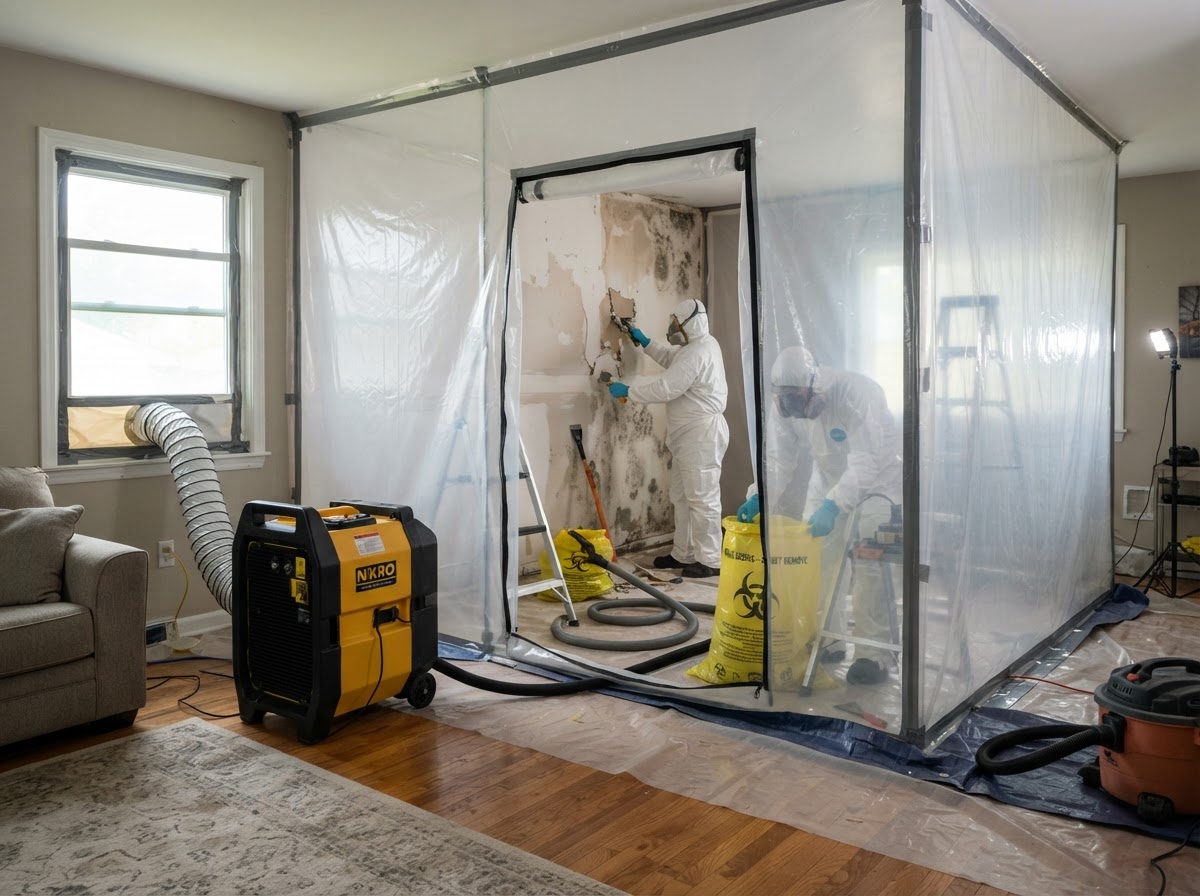
Mold Remediation & Removal in Port Charlotte
Mold remediation addresses mold growth that develops when moisture intrusion goes unresolved. Mold is a symptom of an underlying moisture problem, so remediation is built around identifying and correcting the moisture source as much as removing the visible growth itself.
Remediation is distinct from testing and from ordinary surface cleaning. It involves evaluating the extent of contamination, considering containment for affected areas, controlling the spread of spores during work, removing or cleaning contaminated materials as appropriate, and verifying that moisture conditions have been corrected so growth does not return.
Not every discoloration or musty odor indicates a serious mold problem, and not every case is black mold. Remediation decisions follow the actual moisture findings and the actual materials affected. See related post-hurricane delayed mold.
Benefits for Property Owners
- Assessment of moisture-related contamination
- Appropriate remediation planning
- Evaluation of affected porous materials
- Attention to the underlying moisture source
- Better coordination of repairs after remediation
Service Features & Considerations
- Moisture investigation
- Remediation scope development
- Containment considerations
- Material evaluation
- Controlled cleaning or removal
- Post-remediation assessment when appropriate
Popular Service Types & Solutions
- Residential mold remediation
- Water damage-related mold cleanup
- Attic mold remediation
- Drywall mold remediation
- Mold removal after flooding
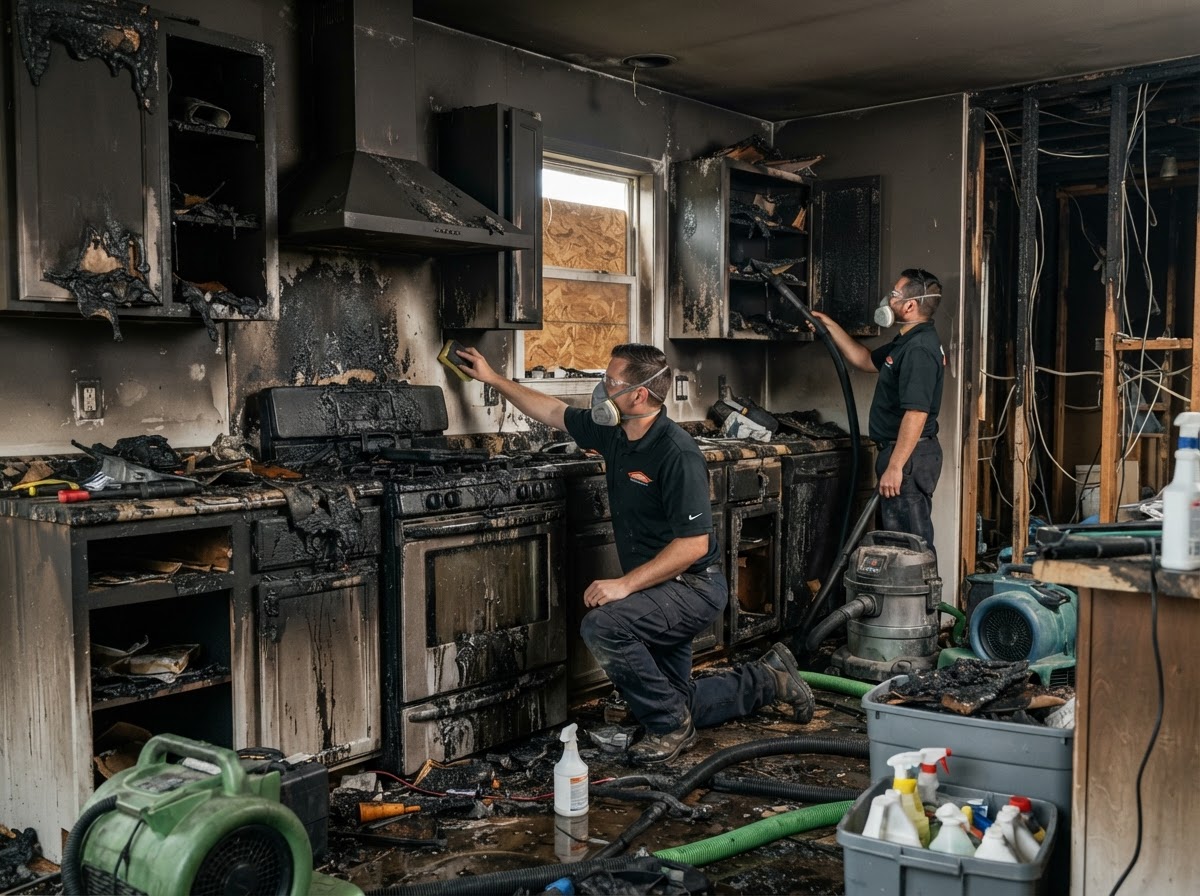
Fire Damage Restoration & Cleanup Near Port Charlotte
Fire damage restoration addresses the combined effects of heat, smoke, soot, odor, and the water used to suppress the fire. Smoke and soot travel far beyond the area exposed to flame, settling on surfaces and inside building materials throughout the property, which is why rooms that were never burned can still require cleaning.
Restoration work evaluates the structural impact of heat, the extent of soot contamination, damaged finishes and drywall, fire-suppression water damage, and contents that may be restored or lost. Odor source management runs through the entire process because smoke residues continue to off-gas until they are removed or neutralized.
Fire restoration connects the initial debris cleanup and soot removal to the longer reconstruction plan, coordinating repairs within the actual scope of the loss.
Benefits for Property Owners
- Organized assessment of fire-related property damage
- Evaluation of smoke and soot contamination
- Better identification of affected building materials
- Coordination of cleaning and restoration work
- Documentation of damage and repair needs
Service Features & Considerations
- Site safety assessment
- Smoke and soot evaluation
- Damaged material assessment
- Odor source management
- Contents cleaning considerations
- Reconstruction planning
Popular Service Types & Solutions
- Residential fire damage restoration
- Kitchen fire cleanup
- Smoke and soot removal
- Fire-related water damage cleanup
- Contents restoration
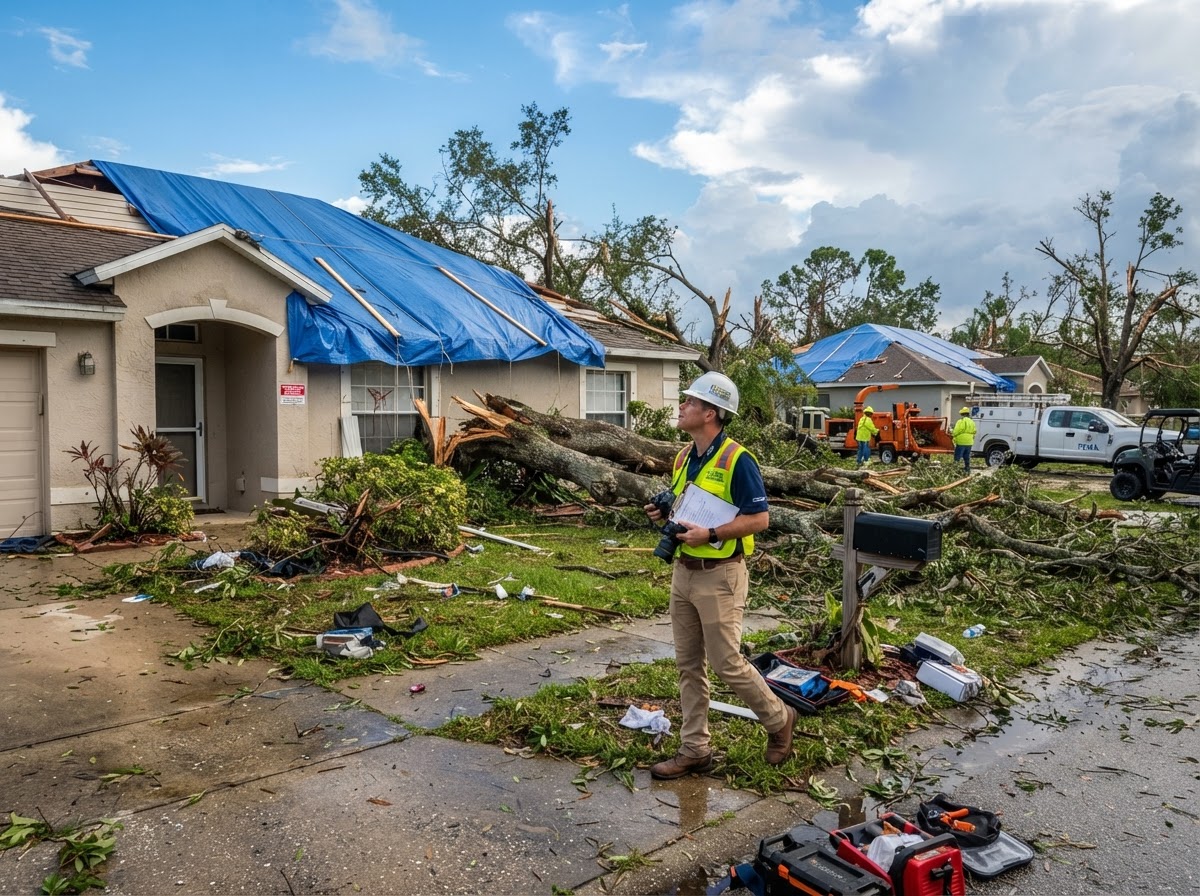
Hurricane & Storm Damage Restoration in Port Charlotte
Hurricane damage restoration addresses the combined wind, rain, and flooding exposure that Southwest Florida properties face during tropical storms and hurricanes. Wind-driven rain enters through damaged roofing, broken openings, and compromised sealants, while storm surge and heavy rainfall introduce flooding along the Charlotte Harbor and Gulf Coast corridor.
Not every Port Charlotte property shares the same storm exposure. Inland homes more often deal with roof and window intrusion and rainwater, while waterfront and canal-front properties can face saltwater flooding, corrosion, and electrical concerns that require a different contamination assessment.
Restoration connects temporary protection, water extraction, structural drying, and the eventual reconstruction of damaged materials within the actual scope of the storm loss. See related canal-front home flood restoration.
Benefits for Property Owners
- Organized assessment of storm damage
- Identification of water intrusion conditions
- Support for appropriate temporary protection planning
- Evaluation of damaged materials
- Coordination of mitigation and repairs
Service Features & Considerations
- Storm damage assessment
- Water extraction
- Roof intrusion evaluation
- Structural drying
- Contamination considerations
- Reconstruction planning
Popular Service Types & Solutions
- Hurricane water damage cleanup
- Wind damage restoration
- Storm surge flood cleanup
- Emergency board-up and roof tarping
- Post-storm reconstruction
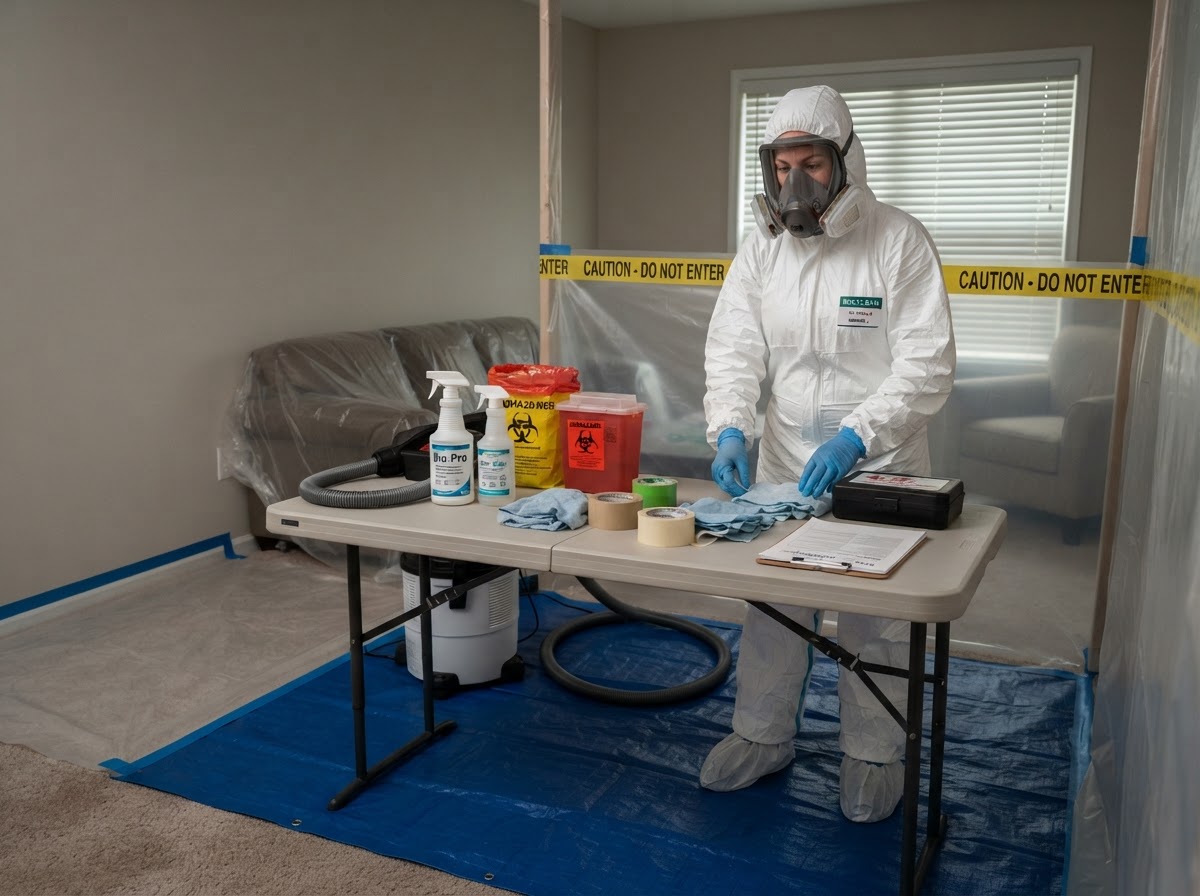
Biohazard Cleanup & Property Restoration Near Port Charlotte
Biohazard cleanup addresses property conditions involving biological contamination that requires appropriate safety procedures, containment, and specialized handling. Work is approached with respect for the people and property involved, using suitable protective equipment and controlled methods rather than ordinary cleaning.
Cleanup evaluates the extent of contamination, the porous materials affected, containment where appropriate, controlled cleaning and disinfection, waste handling requirements, and the condition of materials after the work is complete. Odor management often accompanies the process.
Because these situations can be sensitive, restoration following biohazard cleanup is coordinated carefully, with attention to material removal and property recovery within the actual scope of the situation.
Benefits for Property Owners
- Better understanding of contamination concerns
- Appropriate cleanup planning
- Evaluation of affected property materials
- Controlled handling of potentially contaminated items
- Coordination of restoration following cleanup
Service Features & Considerations
- Initial contamination assessment
- Suitable protective measures
- Containment when appropriate
- Specialized cleaning and disinfection
- Waste management requirements
- Final material evaluation
Popular Service Types & Solutions
- Biohazard property cleanup
- Trauma scene cleanup
- Unattended death cleanup
- Animal waste contamination cleanup
- Specialized sanitation
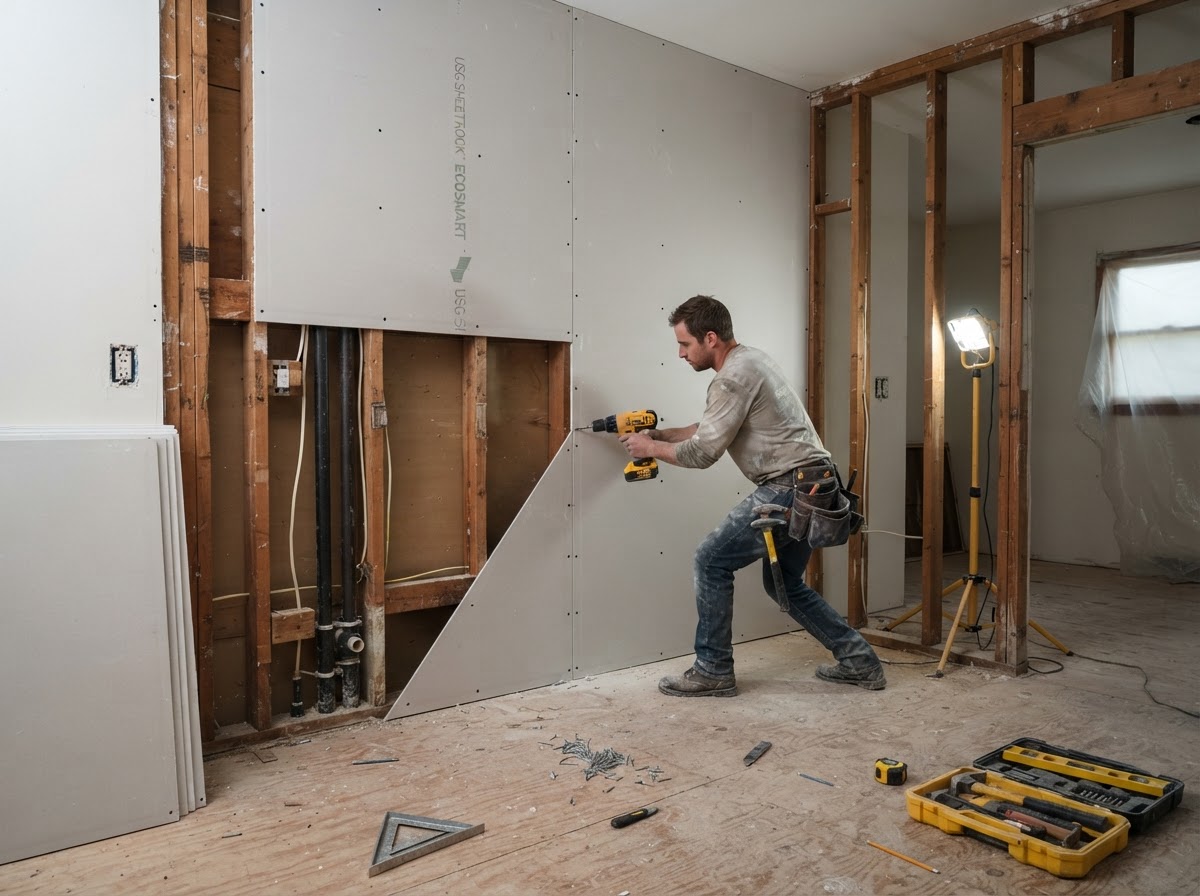
Reconstruction & Build-Back in Port Charlotte
Reconstruction and build-back is the permanent repair phase that follows water, fire, mold, or storm mitigation. Once the structure is dried, cleaned, and the unsalvageable materials are removed, the property still needs to be rebuilt, finished, and returned to a usable condition.
Build-back covers drywall replacement, insulation installation, flooring restoration, ceiling repairs, damaged framing, interior finish work, cabinet coordination, painting, trim and baseboards, and material replacement, with permitting and inspections where applicable. It is the difference between a property that has been stabilized and one that has actually been restored.
Reconstruction connects the mitigation record to the finished repair plan, coordinating qualified trades within the actual scope of the loss rather than as a separate, disconnected project.
Benefits for Property Owners
- Coordinated restoration planning
- Replacement of unsalvageable materials
- Repair of damaged interior finishes
- Rebuilding toward appropriate property conditions
- Organized transition from mitigation to repairs
Service Features & Considerations
- Damage scope evaluation
- Repair planning
- Qualified trade coordination
- Permits and inspections where required
- Drywall and flooring restoration
- Finish work
Popular Service Types & Solutions
- Water damage build-back
- Fire damage reconstruction
- Drywall replacement
- Flooring repairs
- Storm-related interior reconstruction
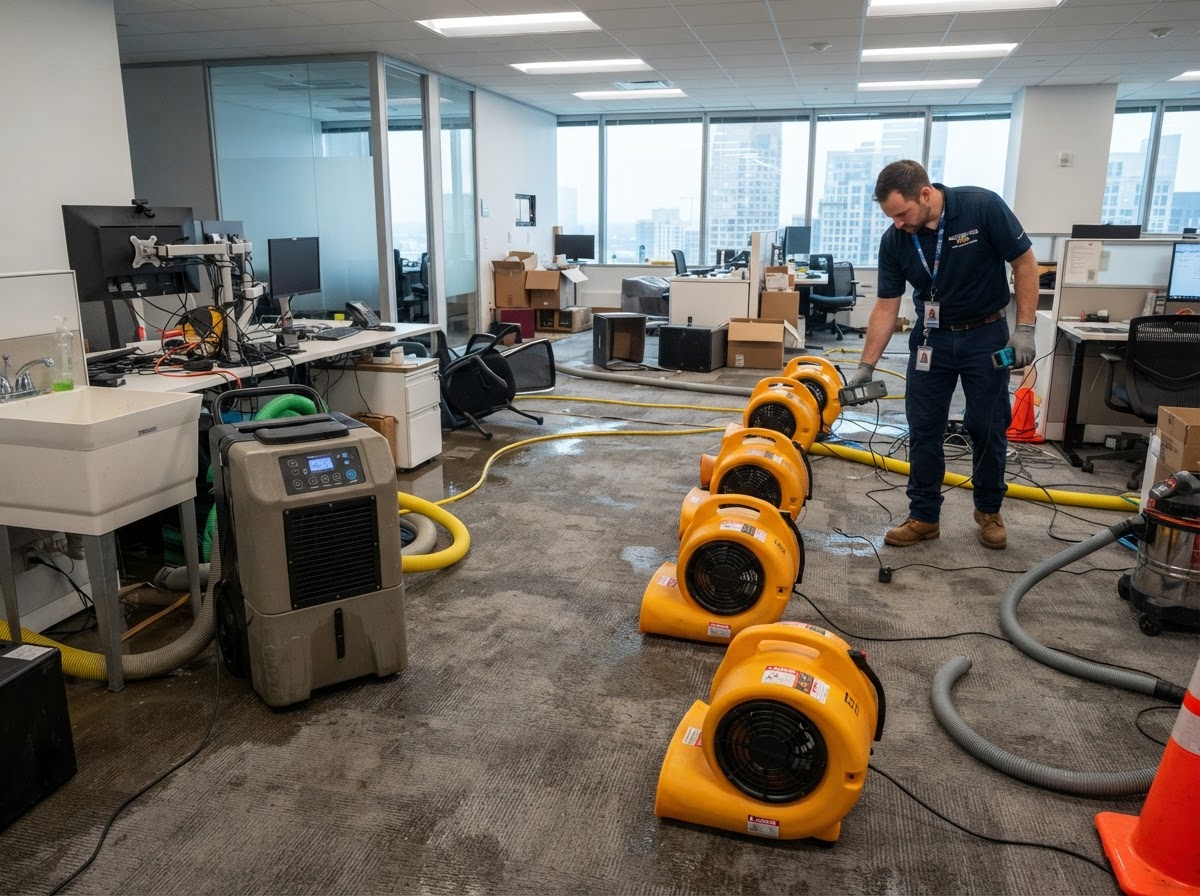
Commercial Water Damage Restoration Near Port Charlotte
Commercial water damage restoration applies the same moisture principles to offices, retail spaces, restaurants, warehouses, and multifamily properties, but with added layers of access, tenants, equipment, inventory, and ongoing building operations. A plumbing failure on an upper floor can affect multiple suites below, and a roof leak over a retail floor can interrupt business while mitigation proceeds.
Commercial restoration evaluates wet ceiling systems, commercial flooring, business contents, and shared building systems, then coordinates water extraction, structural drying, contamination evaluation, and repair planning with authorized property managers. The question of whether work can proceed while a business stays partially open depends on the actual conditions.
Because commercial losses frequently span multiple tenant spaces, documentation and coordination are part of the restoration, not an afterthought. See related condo association & hoa water damage.
Benefits for Property Owners
- Organized commercial damage assessment
- Evaluation of affected work areas
- Better restoration planning across multiple spaces
- Documentation of damaged materials
- Coordination with authorized property managers
Service Features & Considerations
- Commercial moisture assessment
- Water extraction
- Structural drying
- Contamination evaluation
- Material restoration
- Commercial repair coordination
Popular Service Types & Solutions
- Office water damage cleanup
- Retail property flood restoration
- Commercial structural drying
- Multiunit water damage restoration
- Commercial reconstruction planning
Water, Fire, Mold & Storm Damage Restoration Costs Near Port Charlotte
Restoration costs vary with the type of damage, the water contamination category, the square footage and number of rooms affected, the building materials involved, water extraction requirements, drying equipment and its operating duration, containment, cleaning and disinfection, demolition and debris disposal, smoke and soot damage, mold remediation scope, floodwater contamination, structural repairs and reconstruction, commercial property size, accessibility and storm-related conditions. A relatively contained water loss may require limited extraction and drying, while extensive flooding, fire losses, contamination or reconstruction can involve substantially more labor, equipment and material replacement. Every restoration estimate depends on a real damage assessment and a defined scope of work — these ranges are a planning reference, not a company-approved rate sheet.
Pricing notice: Pricing below represents broad preliminary planning ranges drawn from published restoration cost information. These figures are not verified Port Charlotte contractor rates or final project quotes. Actual costs depend on the damage assessment, affected materials, contamination, labor, equipment, drying duration and repair scope. A property-specific estimate is required for accurate pricing.
| Restoration Service | Labor, Equipment & Major Cost Factors | Preliminary Planning Cost Range |
|---|---|---|
| Water Damage Restoration & CleanupView Water Damage Restoration Services | Affected square footage, water source, number of rooms, water contamination category, flooring, drywall, insulation, cabinetry, standing water, extraction, structural drying, equipment days, moisture monitoring, damaged-material removal and restoration labor. | $1,000–$16,000+ A broad illustrative project envelope, not the most common local price. A limited water loss affecting a small area may require less work. Multiroom water damage, hidden saturation, contaminated materials, demolition or structural repairs can produce significantly higher costs. |
| Emergency Water Extraction & RemovalView Emergency Water Extraction Services | Water volume, standing water depth, affected square footage, type of water, pump-out requirements, extraction equipment, flooring and carpet saturation, room accessibility, technician labor, water disposal considerations and severity of flooding. | $500–$4,000+ Primarily describes water removal / extraction scope. Removing accessible water from a small area can cost less than extracting large quantities of standing water from several rooms. Structural drying, contaminated material removal and reconstruction may be additional charges. |
| Flood Damage Cleanup & RestorationView Flood Damage Cleanup Services | Floodwater depth, contaminated water, affected square footage, mud and debris, water extraction, wet insulation, flooring damage, drywall removal, cleaning and sanitation, structural drying, equipment, material disposal and repair needs. | $2,000–$25,000+ Major floods can substantially exceed this illustrative range. Limited indoor flooding may require water removal and drying, while widespread flooding involving contamination, substantial material removal and multiple rooms can create much larger restoration costs. |
| Structural Drying & DehumidificationView Structural Drying Services | Affected structural materials, moisture levels, room size, wall and floor assemblies, number of air movers, dehumidifier capacity, equipment rental days, moisture monitoring, specialty drying systems, accessibility and humidity conditions. | $800–$8,000+ Primarily describes drying-related work. Drying a limited area may require fewer machines and operating days. Saturated walls, subfloors, masonry and multiple rooms may require additional equipment, monitoring and extended drying. |
| Mold Remediation & RemovalView Mold Remediation Services | Affected area size, accessibility, moisture source, containment, protective equipment, contaminated drywall, insulation, flooring, removal requirements, cleaning methods, disposal, moisture correction and appropriate professional assessment. | $1,200–$15,000+ Extensive whole-property remediation may exceed this illustrative range. Localized mold remediation generally involves a smaller scope than contamination inside several rooms, attics, wall cavities or HVAC-related materials. Mold assessment, source repairs and reconstruction may be separately priced. |
| Fire Damage Restoration & CleanupView Fire Damage Restoration Services | Fire severity, affected area, soot deposits, smoke contamination, debris, odor treatment, contents cleaning, damaged drywall, ceiling materials, structural concerns, fire suppression water damage, cleaning labor, material removal and reconstruction. | $3,000–$50,000+ Major structural fires can exceed this range substantially. Small fire losses involving limited smoke or soot may require focused cleanup, while major fires involving structural damage, contaminated contents, water intrusion and rebuilding can cost considerably more. |
| Hurricane & Storm Damage RestorationView Hurricane Damage Restoration Services | Wind damage, roof intrusion, storm surge, floodwater, standing water, debris removal, contamination, saltwater exposure, structural drying, damaged drywall, flooring, insulation, temporary protection, accessibility, demolition and rebuilding. | $5,000–$150,000+ Severe or catastrophic property losses may be substantially higher. Limited stormwater damage may involve targeted repairs and drying, while widespread hurricane flooding, roof damage, structural repairs and reconstruction near Charlotte Harbor and across Southwest Florida can require extensive restoration work. |
| Biohazard Cleanup & Property RestorationView Biohazard Cleanup Services | Contamination type, affected area, worker protection, containment, specialized cleaning, disinfection requirements, contaminated material removal, disposal, odor treatment, accessibility, technician labor and restoration needs. | $1,500–$25,000+ Extensive or unusually complex incidents may exceed this range. Limited contained incidents may require less work than extensive contamination affecting porous materials, flooring, multiple rooms, or specialized waste-handling requirements. |
| Reconstruction & Build-BackView Reconstruction & Build-Back Services | Damaged area, structural condition, drywall, insulation, flooring, cabinetry, framing, demolition, material quality, roofing where relevant, specialty trades, permit requirements, inspections, labor, accessibility and finish selections. | $2,000–$100,000+ A scope-dependent illustration covering minor repairs through substantial rebuilding, not a typical project cost. Limited drywall, paint and flooring repairs may cost substantially less than rebuilding large interior areas or replacing structural components. Major reconstruction can exceed the range shown. Reconstruction may be quoted separately from initial mitigation and drying. |
| Commercial Water Damage RestorationView Commercial Water Damage Restoration Services | Property size, affected square footage, water source, commercial flooring, ceiling systems, office contents, inventory, water extraction, equipment quantity, structural drying, occupied areas, facility access, contamination, demolition and reconstruction. | $5,000–$100,000+ Large commercial losses can exceed this illustrative range. A contained commercial water loss may require localized extraction and drying, while multiple affected suites, extensive equipment deployment, contaminated materials and structural repairs can substantially increase costs. |
A broad illustrative project envelope, not the most common local price.
Labor, equipment & cost factors
Affected square footage, water source, number of rooms, water contamination category, flooring, drywall, insulation, cabinetry, standing water, extraction, structural drying, equipment days, moisture monitoring, damaged-material removal and restoration labor.
What affects the range
A limited water loss affecting a small area may require less work. Multiroom water damage, hidden saturation, contaminated materials, demolition or structural repairs can produce significantly higher costs.
View Water Damage Restoration ServicesPrimarily describes water removal / extraction scope.
Labor, equipment & cost factors
Water volume, standing water depth, affected square footage, type of water, pump-out requirements, extraction equipment, flooring and carpet saturation, room accessibility, technician labor, water disposal considerations and severity of flooding.
What affects the range
Removing accessible water from a small area can cost less than extracting large quantities of standing water from several rooms. Structural drying, contaminated material removal and reconstruction may be additional charges.
View Emergency Water Extraction ServicesMajor floods can substantially exceed this illustrative range.
Labor, equipment & cost factors
Floodwater depth, contaminated water, affected square footage, mud and debris, water extraction, wet insulation, flooring damage, drywall removal, cleaning and sanitation, structural drying, equipment, material disposal and repair needs.
What affects the range
Limited indoor flooding may require water removal and drying, while widespread flooding involving contamination, substantial material removal and multiple rooms can create much larger restoration costs.
View Flood Damage Cleanup ServicesPrimarily describes drying-related work.
Labor, equipment & cost factors
Affected structural materials, moisture levels, room size, wall and floor assemblies, number of air movers, dehumidifier capacity, equipment rental days, moisture monitoring, specialty drying systems, accessibility and humidity conditions.
What affects the range
Drying a limited area may require fewer machines and operating days. Saturated walls, subfloors, masonry and multiple rooms may require additional equipment, monitoring and extended drying.
View Structural Drying ServicesExtensive whole-property remediation may exceed this illustrative range.
Labor, equipment & cost factors
Affected area size, accessibility, moisture source, containment, protective equipment, contaminated drywall, insulation, flooring, removal requirements, cleaning methods, disposal, moisture correction and appropriate professional assessment.
What affects the range
Localized mold remediation generally involves a smaller scope than contamination inside several rooms, attics, wall cavities or HVAC-related materials. Mold assessment, source repairs and reconstruction may be separately priced.
View Mold Remediation ServicesMajor structural fires can exceed this range substantially.
Labor, equipment & cost factors
Fire severity, affected area, soot deposits, smoke contamination, debris, odor treatment, contents cleaning, damaged drywall, ceiling materials, structural concerns, fire suppression water damage, cleaning labor, material removal and reconstruction.
What affects the range
Small fire losses involving limited smoke or soot may require focused cleanup, while major fires involving structural damage, contaminated contents, water intrusion and rebuilding can cost considerably more.
View Fire Damage Restoration ServicesSevere or catastrophic property losses may be substantially higher.
Labor, equipment & cost factors
Wind damage, roof intrusion, storm surge, floodwater, standing water, debris removal, contamination, saltwater exposure, structural drying, damaged drywall, flooring, insulation, temporary protection, accessibility, demolition and rebuilding.
What affects the range
Limited stormwater damage may involve targeted repairs and drying, while widespread hurricane flooding, roof damage, structural repairs and reconstruction near Charlotte Harbor and across Southwest Florida can require extensive restoration work.
View Hurricane Damage Restoration ServicesExtensive or unusually complex incidents may exceed this range.
Labor, equipment & cost factors
Contamination type, affected area, worker protection, containment, specialized cleaning, disinfection requirements, contaminated material removal, disposal, odor treatment, accessibility, technician labor and restoration needs.
What affects the range
Limited contained incidents may require less work than extensive contamination affecting porous materials, flooring, multiple rooms, or specialized waste-handling requirements.
View Biohazard Cleanup ServicesA scope-dependent illustration covering minor repairs through substantial rebuilding, not a typical project cost.
Labor, equipment & cost factors
Damaged area, structural condition, drywall, insulation, flooring, cabinetry, framing, demolition, material quality, roofing where relevant, specialty trades, permit requirements, inspections, labor, accessibility and finish selections.
What affects the range
Limited drywall, paint and flooring repairs may cost substantially less than rebuilding large interior areas or replacing structural components. Major reconstruction can exceed the range shown. Reconstruction may be quoted separately from initial mitigation and drying.
View Reconstruction & Build-Back ServicesLarge commercial losses can exceed this illustrative range.
Labor, equipment & cost factors
Property size, affected square footage, water source, commercial flooring, ceiling systems, office contents, inventory, water extraction, equipment quantity, structural drying, occupied areas, facility access, contamination, demolition and reconstruction.
What affects the range
A contained commercial water loss may require localized extraction and drying, while multiple affected suites, extensive equipment deployment, contaminated materials and structural repairs can substantially increase costs.
View Commercial Water Damage Restoration ServicesRestoration pricing varies with the type of loss, contamination, property size, affected materials, equipment requirements, drying duration, labor, demolition and reconstruction. The figures above are broad preliminary planning estimates, not guaranteed prices or verified local contractor rates. Services may overlap within a single project. Actual pricing requires a property-specific assessment and written scope of work. Insurance coverage depends on the policy and circumstances of the loss.
Request a Property-Specific Restoration Estimate in Port Charlotte
A useful restoration estimate depends on information about the property and the damage — the property city, type of damage, water source where known, approximate affected area, number of damaged rooms, water or fire exposure, visible material damage, time since discovery, potential contamination, property type and photos when available. A qualified provider may need to evaluate the property before giving an accurate price.
Water, Fire, Mold & Storm Damage Restoration Services
Comprehensive restoration services for Port Charlotte homes and businesses. Each category addresses distinct damage types, building materials, and recovery considerations across Charlotte County and surrounding Southwest Florida communities.
Water Damage Restoration
Emergency water extraction, flood cleanup, and structural drying after plumbing leaks, appliance overflows, and water-damaged building materials.
- •Emergency water extraction
- •Flood damage cleanup
- •Structural drying & dehumidification
- •Plumbing leak and appliance overflow restoration
Fire & Smoke Damage Restoration
Fire damage cleanup, soot removal, smoke odor treatment, and fire suppression water damage recovery for residential and commercial properties.
- •Fire damage cleanup and soot removal
- •Smoke odor treatment
- •Fire suppression water damage
- •Contents cleaning considerations
Mold Remediation
Moisture-related mold problems, containment, affected material removal, cleaning, and moisture source correction for Port Charlotte properties.
- •Mold inspection and assessment
- •Containment and affected material removal
- •HEPA cleaning and antimicrobial treatment
- •Moisture source correction
Storm & Hurricane Damage
Wind-driven rain, roof leaks, storm flooding, hurricane damage, and post-storm moisture restoration for Southwest Florida properties.
- •Hurricane and wind damage restoration
- •Storm surge and floodwater cleanup
- •Emergency board-up and roof tarping
- •Post-storm moisture evaluation
Biohazard & Specialized Cleanup
Sewage backup cleanup, Category 3 black water remediation, trauma and biohazard cleanup, and specialized environmental restoration services.
- •Sewage backup and Category 3 water cleanup
- •Trauma and biohazard remediation
- •Hoarding and specialized cleanup
- •Disinfection and sanitation
Reconstruction & Build-Back
Restoration repairs following mitigation — drywall, insulation, flooring, and interior reconstruction after water, fire, or storm damage.
- •Drywall and insulation replacement
- •Flooring restoration and replacement
- •Interior finish and cabinetry repairs
- •Coordination of reconstruction trades
Commercial Property Damage Restoration in Port Charlotte
Commercial property damage can affect building operations, occupants, equipment, inventory, and multiple areas of a facility. Explore restoration services organized for business properties and property management needs across Charlotte County.
Restoration for Different Commercial Properties
Each commercial property type presents distinct restoration considerations — from multi-unit coordination to kitchen fire cleanup, guest accommodations, and large warehouse floor areas.
Apartment Complexes
Multi-unit rental properties and multifamily buildings.
Condos & HOAs
Association coordination and shared-building restoration.
Hotels & Hospitality
Guest rooms, common areas, and lodging facilities.
Restaurants
Commercial kitchens, dining areas, and food-service spaces.
Offices & Retail
Workspaces, storefronts, and customer-facing properties.
Warehouses & Industrial
Large floor areas, inventory, and industrial facilities.
Hurricane, Storm & Flood Damage Restoration in Southwest Florida
Tropical storms, hurricanes, heavy rainfall, wind-driven rain, and coastal flooding create different restoration challenges for Port Charlotte properties. Understanding the type of storm damage helps property owners plan appropriate cleanup and recovery.
Storm Surge & Floodwater
Storm surge can push contaminated floodwater into coastal properties. Floodwater may carry silt, bacteria, and debris requiring professional evaluation and contamination precautions during cleanup.
Wind-Driven Rain
High winds can force rain through damaged roofs, windows, and exterior openings. Water intrusion through compromised building envelopes can affect interior walls, ceilings, and insulation.
Roof Leaks & Attic Water Damage
Storm-damaged roofing can allow water into attic spaces, saturating insulation and affecting ceiling assemblies below. Hidden moisture in attics may go undetected until staining appears.
Structural Drying After Storms
After storm water intrusion, affected building materials may require moisture evaluation and controlled drying to return to appropriate moisture levels before reconstruction.
Post-Hurricane Mold Concerns
Lingering moisture after a storm can contribute to mold growth on damp building materials. Addressing moisture promptly and evaluating affected materials helps reduce secondary damage.
Commercial Storm Damage
Business properties affected by storm damage may face operational interruptions, inventory exposure, and multi-area restoration needs requiring coordinated planning.
Storm Damage Documentation
Photographs of damaged materials, affected areas, and storm-related conditions — along with restoration records and moisture documentation — may support communication with an insurance company. Coverage depends on policy terms and the circumstances of the loss.
Related Storm Restoration Services
Water Damage Restoration & Flood Cleanup Near Port Charlotte
Water intrusion can strike without warning. Whether triggered by an air conditioning condensate line backing up into ceiling drywall, an older cast iron pipe failing under a concrete slab, or storm surge overflowing Charlotte Harbor canals, the consequences to interior building materials escalate by the hour. Water migration is insidious: moisture travels horizontally behind baseboards and wicks vertically up drywall assemblies, saturating insulation and warping base cabinetry.
In water damage restoration, identifying the contamination category is vital for safety:
Supply lines, sink overflows, and rainwater prior to contact with contaminants.
Washing machines, dishwashers, and sump pump overflows carrying microbial residue.
Sewage backups, storm surge, and standing floodwaters carrying pathogens.
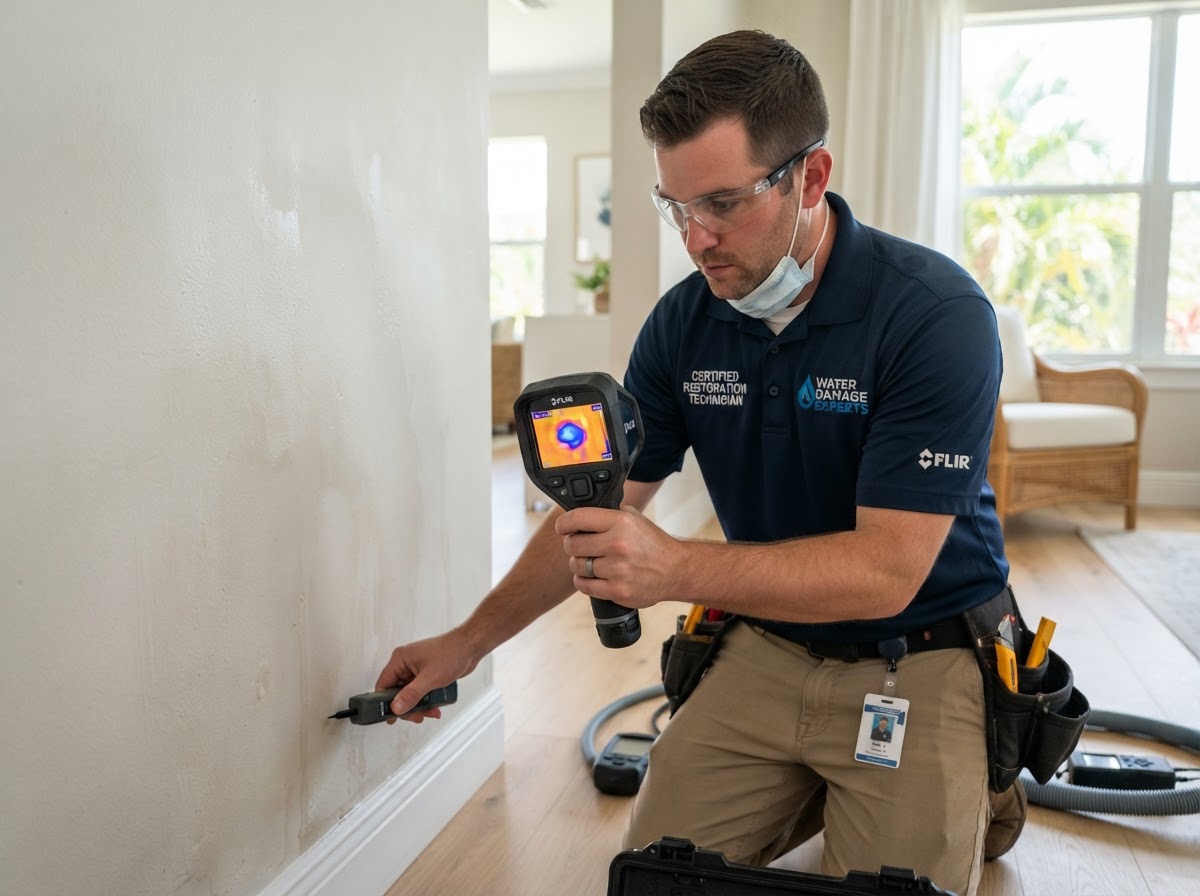
Fire Damage Restoration, Mold Removal & Specialty Cleanup
Property emergencies frequently involve complex environmental and chemical hazards. From corrosive smoke films coating delicate electronics to pervasive attic mold colonies and sensitive biohazard cleanup, specialized remediation protocols are required to safeguard occupant health and restore building integrity.
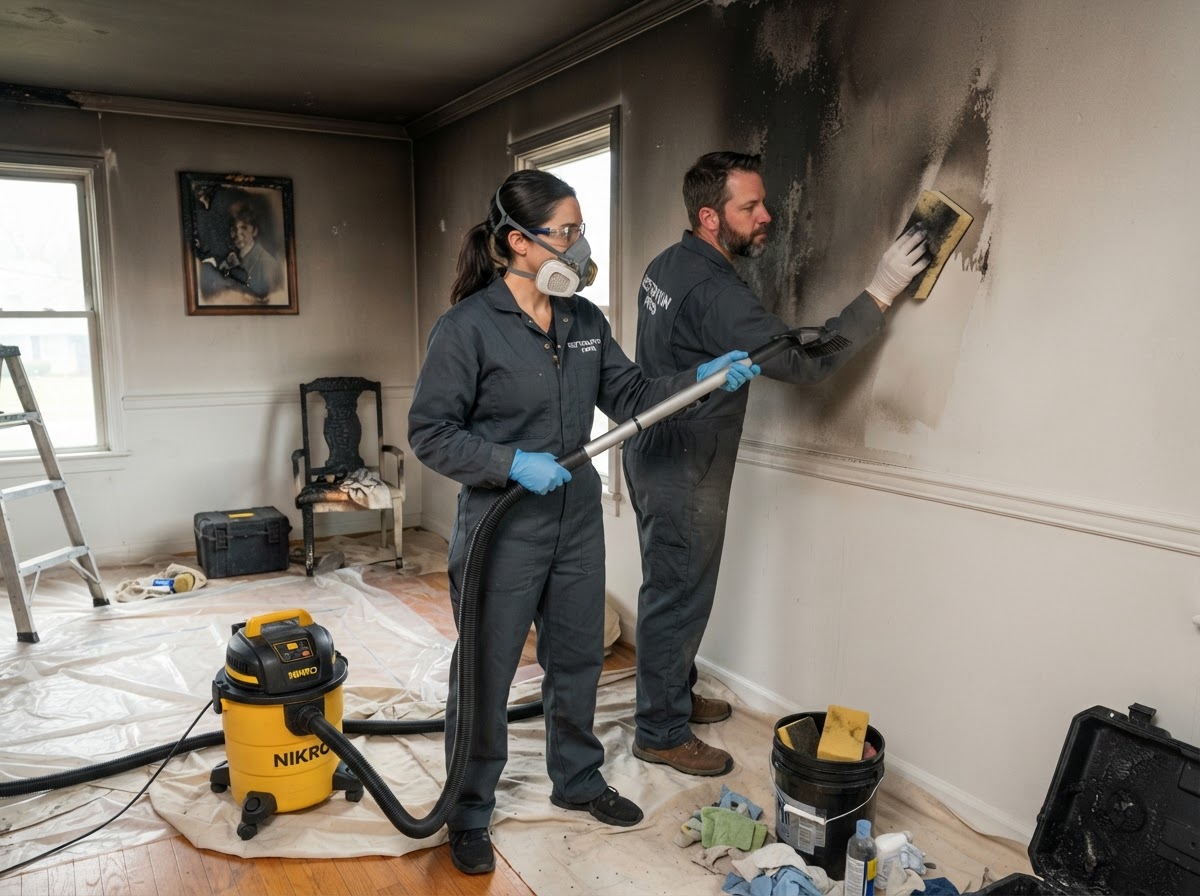
Acidic Soot & Odor Neutralization
Extinguishing the fire is only the initial step. Protein soot, synthetic plastic residue, and pervasive smoke penetrate wall voids and HVAC systems. Restoration requires HEPA dry sponging, thermal fogging, and ultrasonic contents cleaning.
- • Kitchen and grease fire cleanup
- • Electrical fire residue restoration
- • HVAC ductwork decontamination
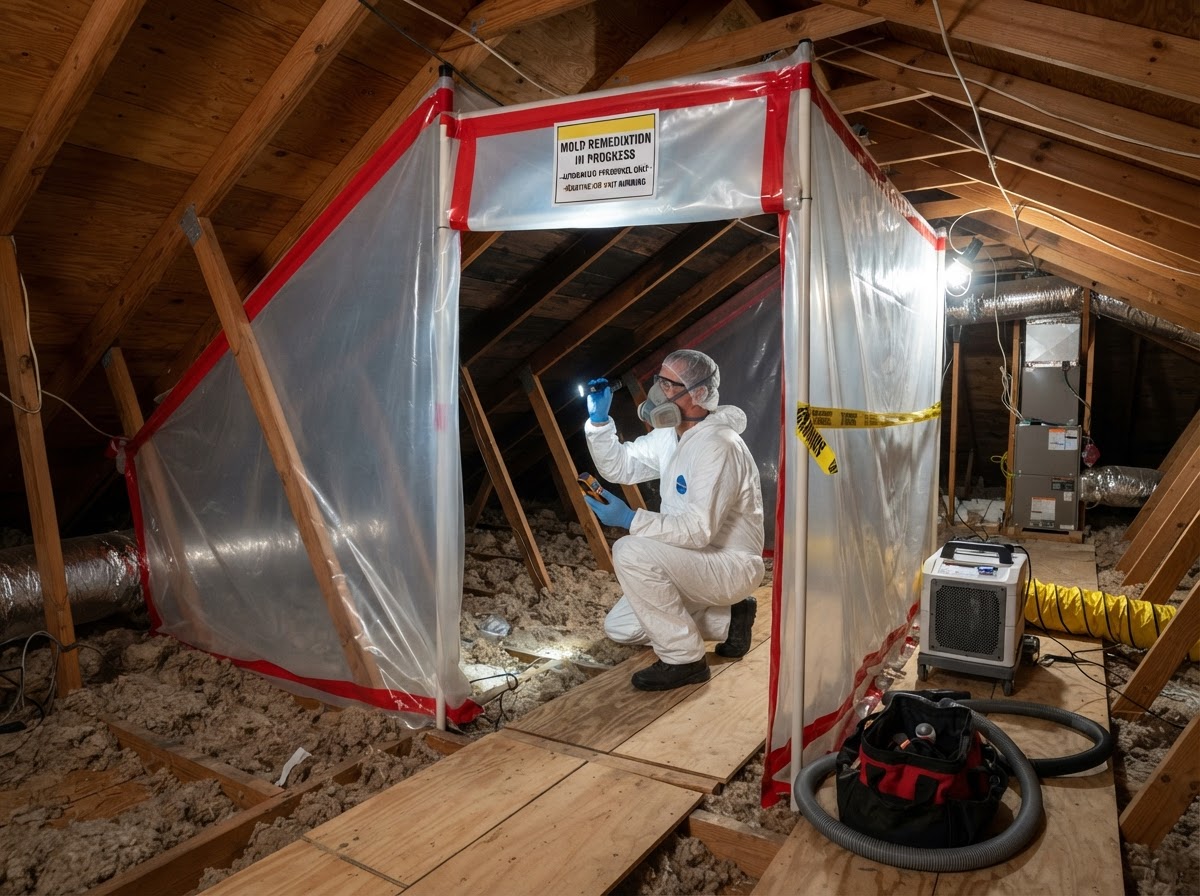
Safe Containment & Microbial Removal
In Southwest Florida, high ambient relative humidity coupled with AC cooling fosters microbial growth on wet drywall and subflooring. Remediation involves true negative-pressure containment barriers, HEPA filtration, and structural antimicrobial wash.
- • Attic and ceiling mold cleanup
- • AC air handler and plenum remediation
- • Black mold containment protocols
Trauma, Hoarding & Pathogen Sanitation
Biohazard situations demand appropriate protective equipment, careful waste handling, and proper disinfection procedures. Difficult property remediation scenarios are handled with complete discretion and sensitivity.
- • Unattended death & trauma remediation
- • Severe clutter & hoarding cleanup
- • Animal waste & biological decontamination
Hurricane, Storm Damage & Reconstruction Services in Charlotte County
Charlotte County property owners know the destructive power of Gulf Coast storms. Tropical storms and major hurricanes subject Port Charlotte homes to extreme wind loads, wind-driven horizontal rain forced beneath soffits and roof tiles, and devastating storm surge along the Peace River and Charlotte Harbor canals.
When a hurricane strikes, mitigation must commence immediately to prevent secondary loss: emergency roof tarping prevents progressive water intrusion, board-up stabilizes compromised window envelopes, and industrial desiccant drying prevents rapid black mold outbreaks in saturated wall cavities. For snowbirds and seasonal owners who return months after a storm to discover hidden water intrusion, comprehensive structural drying and full reconstruction rebuild properties back to code.
Immediate roof tarping, envelope board-up, storm surge extraction, and desiccant dehumidification.
Drywall and insulation replacement, subfloor framing repair, cabinetry rebuilds, and finish trim.
Commercial Property Restoration
Commercial restoration requires specialized project management to minimize business interruption. We coordinate large-loss water extraction and structural drying for retail spaces, medical facilities, condominium HOAs, and multi-tenant offices along US-41 and Kings Highway in Port Charlotte.
How the Property Restoration Process Works
Navigating property damage can be overwhelming. Knowing what happens at each stage of mitigation and recovery provides clarity and peace of mind. Not every project follows an identical sequence — some losses require only extraction and drying, while others involve reconstruction. The workflow below outlines the stages a restoration project may move through.
Property Inquiry
The property owner provides information about the damage, location, and circumstances of the loss.
Damage Assessment
Affected areas, materials, moisture conditions, contamination, and safety concerns are evaluated.
Stabilization & Mitigation
Appropriate measures may be used to limit further damage — containment, water removal, or temporary protection.
Water Removal or Cleanup
Depending on the loss, work may involve extraction, debris removal, soot cleaning, or contamination cleanup.
Drying & Remediation
Affected materials are dried, cleaned, or removed as appropriate, with moisture monitoring throughout.
Documentation
Damage conditions and restoration work may be documented with photographs, moisture readings, and scopes.
Reconstruction
Where needed, damaged materials may require repair or replacement after mitigation is complete.
Final Review
The completed scope is reviewed and any remaining needs are identified before project closeout.
Clear, Itemized Documentation for Your Property Claim
Navigating insurance after water or fire damage requires objective proof. We provide date-stamped photographic loss records, thermal moisture logs, and itemized scopes of work formatted for property owners and insurance adjusters. We do not act as public adjusters or promise guaranteed claim approval, but we furnish the clear data necessary to demonstrate the exact extent of loss.
Restoration of Water- and Fire-Damaged Property Contents
Property damage may affect more than building materials. Furniture, upholstery, rugs, personal belongings, documents, and commercial inventory can all be exposed to water, smoke, soot, or contamination. Contents restoration involves assessment, documentation, cleaning, and evaluation of what can be restored versus what may require replacement.
Furniture & Upholstery
- •Furniture
- •Upholstery
- •Rugs
- •Household belongings
Personal Items & Documents
- •Documents
- •Decorative items
- •Personal belongings
- •Stored household goods
Commercial Inventory & Equipment
- •Commercial inventory
- •Office equipment
- •Smoke-affected contents
- •Business property
Contents restoration depends on the material type, water source, contamination level, and exposure time. Some items may be cleaned and restored, while others — particularly sewage-contaminated or severely damaged contents — may require disposal and replacement. Documentation through photographs and inventories supports insurance communication.
Restoration Documentation & Insurance-Related Guidance
Property damage documentation may support communication with an insurance company. Photographs of affected areas, records of damaged materials, moisture readings, restoration work scopes, estimates, invoices, and contents inventories can help demonstrate the extent of loss.
Insurance coverage depends on policy terms, endorsements, exclusions, and the circumstances of the loss. Restoration contractors can provide documentation of damage conditions and work performed, but coverage determinations belong to insurers. This business does not act as a licensed public adjuster and cannot guarantee insurance approval.
Documentation That May Be Useful
Insurance & Restoration Resources
Restoration Services Throughout Port Charlotte & Southwest Florida
As our primary operational hub, Port Charlotte serves as the central focal point for residential and commercial restoration across Charlotte County and adjoining regions. Southwest Florida homes encompass unique building typologies: concrete block construction, terrazzo flooring over monolithic slabs, extensive canal-front canal seawall exposures, manufactured home parks, and high-density condominium associations.
We actively support property owners facing emergency water extraction, mold remediation, fire damage, and hurricane recovery across our confirmed service territory:
Charlotte County Communities Served
Primary Core Hub: Port Charlotte, FL (Charlotte County). Emergency water, fire, mold & storm services dispatched locally.
Verify Service at Your Address →Priority Service Areas in Port Charlotte & Surrounding Communities
Property Damage Restoration Guides & Resources
Find practical information about water damage, flooding, structural drying, mold, insurance documentation, and hurricane recovery for Port Charlotte and Southwest Florida properties.
Water Damage Restoration Cost Guide
What affects restoration costs — water source, contamination, materials, drying, and repairs.
Read GuideDoes Homeowners Insurance Cover Water Damage in Florida?
Coverage scenarios, exclusions, documentation, and what contractors can and cannot determine.
Read GuideFlood Insurance vs. Homeowners Insurance
Key differences between flood and homeowners coverage for Florida storm and water damage.
Read GuideFirst 24 Hours After Water Damage
Safety, water shutoff, documentation, contamination, and when to request restoration help.
Read GuideHow Long Does Structural Drying Take?
Factors affecting drying time, materials, dehumidification, and moisture monitoring.
Read GuideMold After Water Damage
Warning signs, prevention, and what professional evaluation involves after a water loss.
Read GuideHurricane Damage Recovery Checklist
Southwest Florida storm recovery guidance — safety, stabilization, and documentation.
Water Damage vs. Flood Damage
Understanding the difference and why it matters for restoration and insurance.
Reconstruction After Water & Fire Damage
What the reconstruction phase involves after mitigation is complete.
Port Charlotte Restoration Questions & Request Help
When property damage occurs, clear answers are essential. Review the most frequent questions regarding water mitigation, mold containment, and insurance protocols in Charlotte County, then submit your property details below.
Request Restoration Help
Tell us about the property damage and the location. Submit your inquiry so the appropriate next steps can be discussed.